OOYOO’s innovative CO₂ separation membrane technology, accelerated toward commercialization by measurement


Shaping the future of CO₂ capture with membranes: OOYOO, a deep-tech startup from Kyoto University
Extreme heat, torrential rain, droughts, and wildfires - the impacts of climate change are now observed and recognized around the world. While governments and companies are under increasing pressure to reduce greenhouse gas emissions, many hard-to-abate industries remain, including cement, lime, steel, chemicals, process emissions, and flue gases from waste-to-energy plants. As a result, demand for CO₂ capture technologies that can be deployed at scale and at lower cost is stronger than ever.
OOYOO Ltd. is tackling this challenge with its proprietary membrane separation technology. Founded in 2020 based on research by Professor Easan Sivaniah of Kyoto University’s Institute for Integrated Cell-Material Sciences (iCeMS), OOYOO is a deep-tech startup developing high-performance polymer gas separation membranes with potential applications across a wide range of gas separation processes.
“The name OOYOO itself has no specific meaning,” explains Shogo Otani, Representative Director & CEO of OOYOO. “That means it has the potential to become anything. The same applies to our separation membranes - they have the potential to be used with many different gases, in many different locations, and at many different scales.”
OOYOO is now applying this technology to one of the world’s most pressing challenges: CO₂ separation and capture. Leveraging the membranes’ high selectivity and permeability, the company has raised more than JPY 2 billion to date, including public funding.
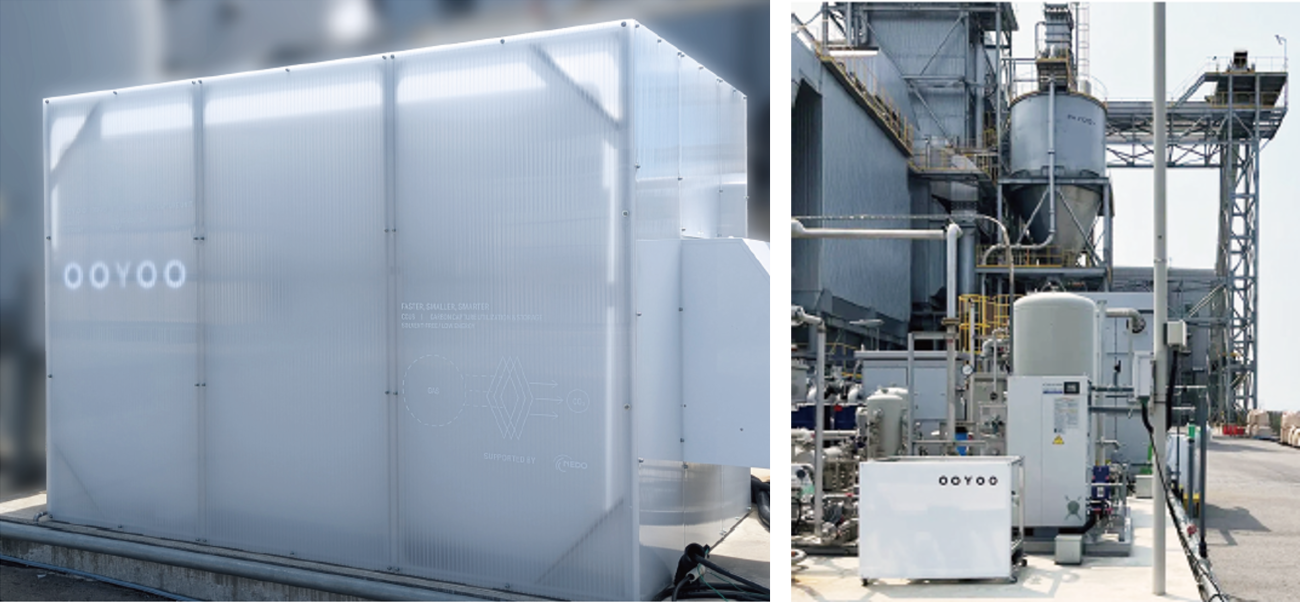
As of October 2026, OOYOO is conducting a CO₂ capture demonstration at a biomass power plant in Tottori Prefecture, with a capacity of 100 kg of CO₂ per day and plans to scale the system up to approximately one ton per day within 2026.
Why membranes? Advantages compared with amine absorption
OOYOO aims to become a global membrane separation technology provider and a key enabler of CCUS, serving not only small- and medium-scale emission sources but also large-scale applications.
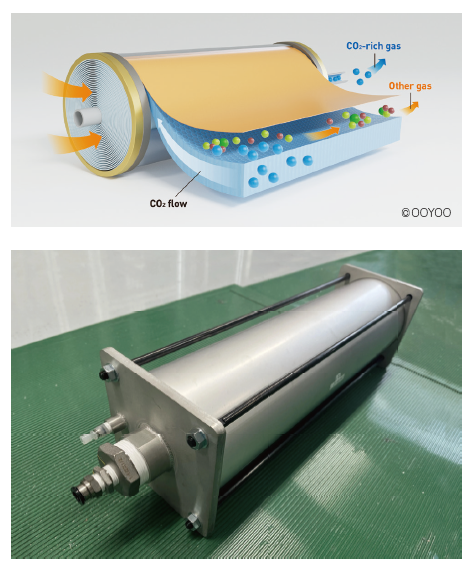
One of the most established technologies for CO₂ capture is amine absorption. In this process, CO₂ reacts chemically with an amine solution in an absorber and is then released by heating the solution in a regeneration tower.
The technology has a long track record, can be applied to large volumes of flue gas, and provides high CO₂ capture rates and purity. However, the process requires heat and steam, and the equipment - typically including an absorber, regenerator, and heat exchangers - requires substantial installation space. Particularly for small- to medium-sized emission sources, capital and operating costs can also become relatively burdensome.
Membrane separation offers a way to address these challenges. Rather than relying on a chemical reaction, membrane separation selectively allows CO₂ to permeate through the membrane based on differences in partial pressure. No regeneration heat is required. The basic system can also be packaged into simple, compact modules that can be added or removed according to the required capacity, enabling a highly flexible modular approach.
However, membrane separation itself remains a developing technology. Challenges include CO₂ selectivity, permeability, scalability, durability against various flue-gas components, and manufacturability. The key is not only to develop high-performance membrane materials, but also to turn them into commercially scalable CO₂ capture systems.
OOYOO’s membrane technology achieves its performance by combining multiple polymers. It successfully addresses the inherent trade-off between high permeability and high selectivity, enabling more energy-efficient and compact CO₂ capture systems. At the same time, the membranes are based on commercially available polymers, making mass production feasible.
“The compact footprint of membrane separation is an overwhelming advantage. Our membranes continue to evolve, and we can make the systems even smaller.
Membrane separation also requires no thermal energy, which makes it highly compatible with the increasingly electrified society of the future. It uses no chemicals, can flexibly follow rapidly changing power-generation loads, and does not release hazardous chemical substances. This makes it environmentally friendly and suitable for installation virtually anywhere.”
Shogo Otani, Representative Director & CEO, OOYOO Ltd.
OOYOO explains that the membrane, developed from Professor Easan Sivaniah’s technology at Kyoto University, delivers world-class performance. The company develops its technology with mass production in mind and has already reached a stage close to commercialization while maintaining this high performance.
As of October 2026, OOYOO is carrying out demonstrations using applications such as city-gas boilers and waste incinerators as it works toward larger-scale systems and commercialization. One such project is the recovery of CO₂ from combustion flue gas at a biomass power plant in Tottori Prefecture.
“Commercially available CO₂ sensors and analyzers, as well as our own measurement devices, all suffered from the same issue: interference from moisture. None of them could solve it.”
Ralph Nasara, CTO, OOYOO Ltd.
The measurement barrier: proving membrane performance
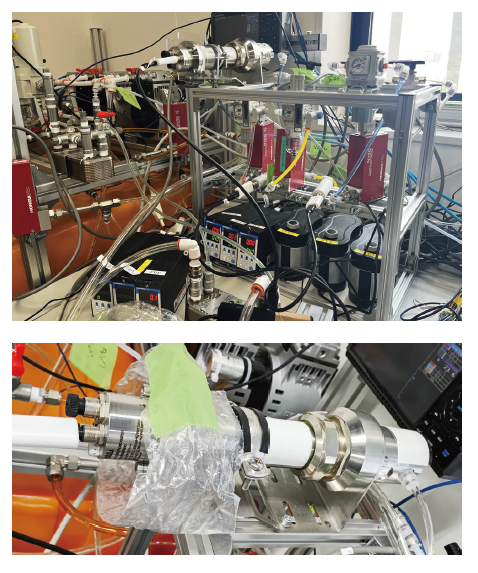
Accurate and reliable CO₂ measurement is essential for demonstrating membrane performance. Yet this turned out to be an unexpectedly time-consuming challenge for OOYOO. The company initially tested commercially available CO₂ sensors and analyzers, as well as an internally developed NDIR measurement device. However, none of them could overcome the problem of interference from moisture.
Combustion flue gas contains high levels of humidity. Conventional gas analyzers therefore typically require sampling pretreatment such as cooling and dehumidification. This comes with several disadvantages: delayed response, CO₂ dissolving into condensed water, additional sampling-system engineering and installation, and increased maintenance requirements.
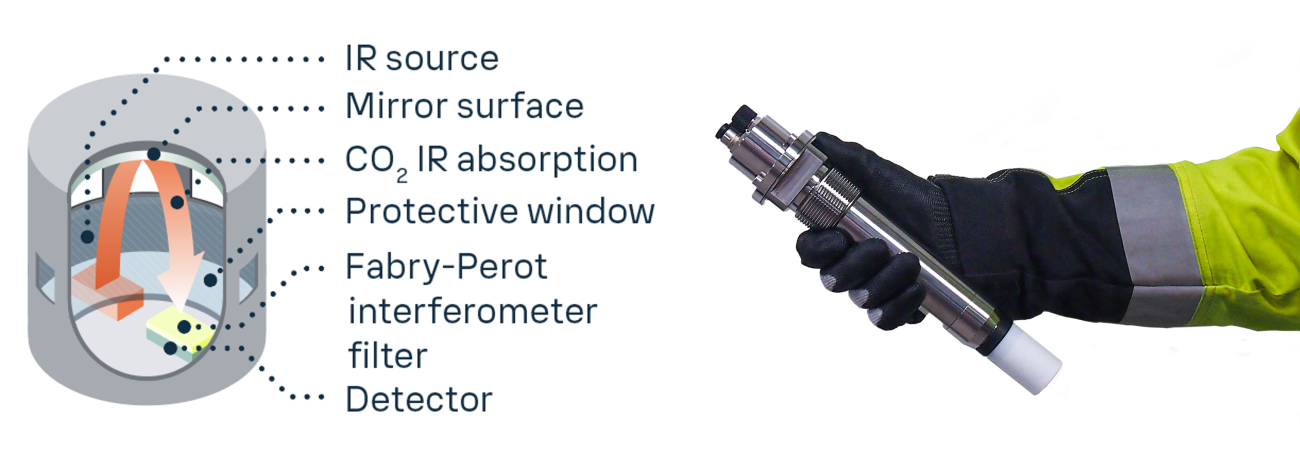
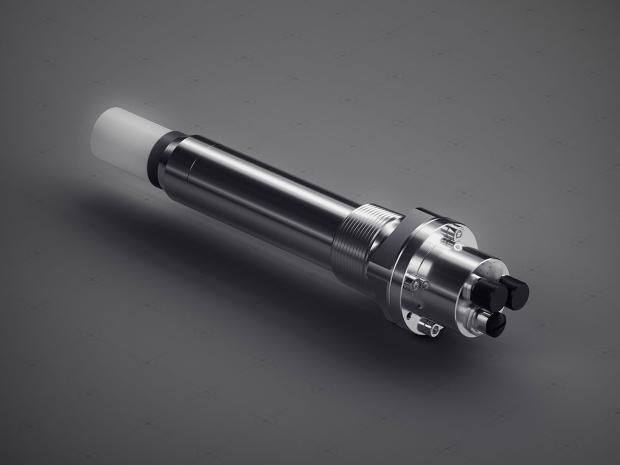
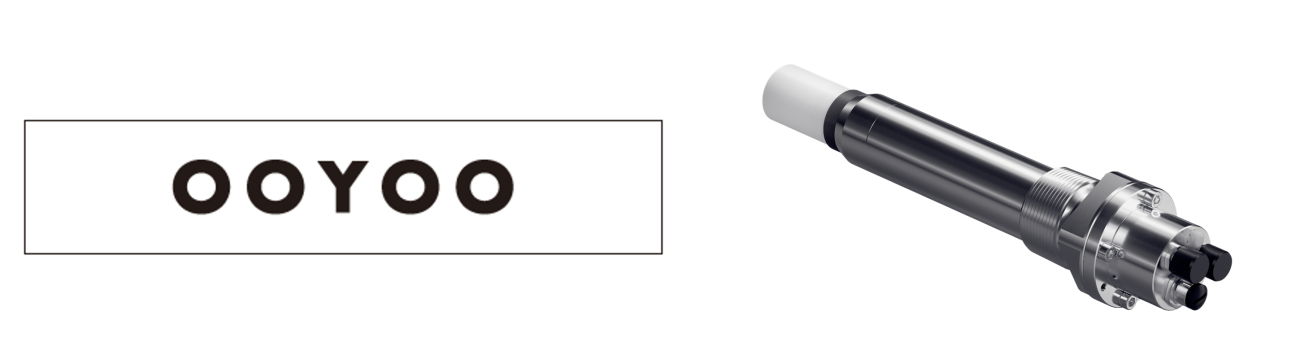
OOYOO therefore selected the Vaisala MGP241. It was the only solution evaluated by OOYOO that could measure wet gas directly inline without any pretreatment. The MGP241 is a multigas probe developed for CO₂ capture applications. Its highly stable CARBOCAP® sensor enables simultaneous inline measurement of CO₂ and moisture.
Key features include:
| Key feature | Description |
| CO₂ measurement range | 0–100 vol-% |
| Inline installation | Direct installation into process piping |
| Measurement in high humidity | Direct measurement even in high-humidity environments, without sample drying or other conditioning |
| Maintenance-free operation | Patented NDIR sensor technology eliminates the need for routine calibration |
| Fast response | Approximately 7-second measurement cycle |
| Simultaneous measurement | Measures CO₂ and moisture/dew point simultaneously |
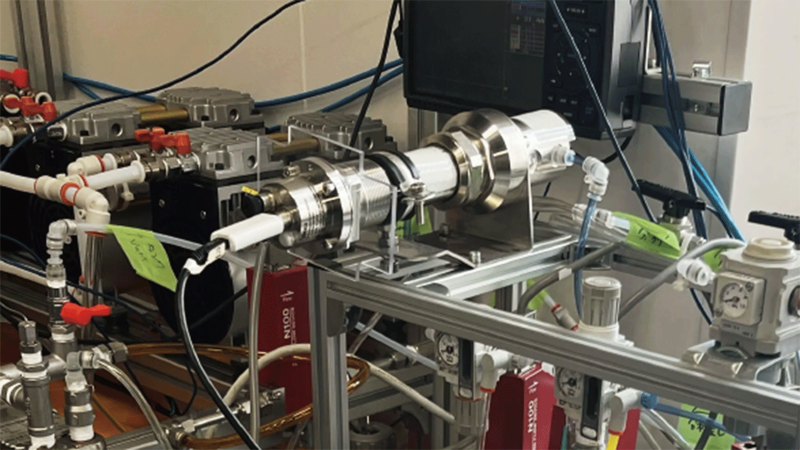
OOYOO installs MGP241 probes on the feed, permeate and retentate sides of its separation membrane system, allowing membrane performance to be evaluated in real time based on CO₂ concentration.
From development to practical deployment: measurement data supporting the next stage
Measured CO₂ recovery rates provide an important means of verifying consistency with design and simulation values. Eliminating the need for a pretreatment system also provides benefits in terms of installation footprint, initial investment, maintenance frequency, and response time.
The value of this measurement data extends well beyond the development stage. When membrane modules are deployed in actual plants, real-time measurement data can also support:
- quality assurance of captured CO₂
- monitoring of module condition
- detection of membrane degradation or abnormalities
- calculation of recovered CO₂ volumes
All of these applications depend on very accurate and reliable measurements.
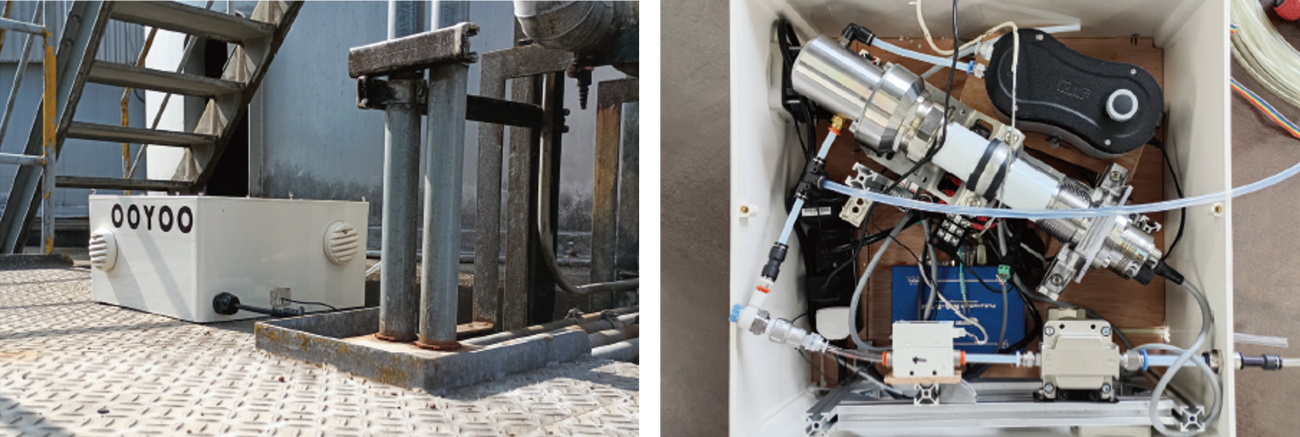
As of October 2026, OOYOO is working toward a one-ton-per-day demonstration system in Tottori Prefecture and aims to commercialize its gas separation membranes and modules during fiscal year 2026. OOYOO has already launched the 100KPD Compact CO₂ Capture Unit, which captures 100 kg of CO₂ per day within a footprint of approximately 5 m².
To further accelerate adoption of the technology, OOYOO is also developing a compact kit integrating the MGP241 with CO₂ measurement and capture functionality. Equipped with a pump, valves, flowmeters, and a drain system, the kit can simply be connected to an emission source, allowing CO₂ measurement and capture experiments to begin quickly and easily.
The acquired data is collected and analyzed through remote monitoring and used to assess the feasibility of CO₂ capture and calculate the required membrane-module specifications. OOYOO is also considering business models such as sales and rental services to make the system more convenient and accessible for users.
OOYOO aims to transform the CO₂ capture market through its proprietary membrane separation technology. Turning this technology into a reliable commercial solution requires combining continuous technological refinement with measurement capable of objectively validating performance and results. Vaisala will continue supporting OOYOO’s efforts through the MGP241 and other measurement solutions.
“Reliable measurement is essential in CO₂ capture. A low-cost, simple, and reliable measurement solution such as Vaisala’s inline probe is a highly rational choice for us as we tackle the challenging task of capturing CO₂ from flue gas.”
Shogo Otani, Representative Director & CEO, OOYOO Ltd.
MGP241 key features
- Proprietary CARBOCAP® sensor based on non-dispersive infrared (NDIR) absorption
- Simultaneous measurement of CO₂ and dew point
- CO₂ concentration: 0…100 vol-%
- H₂O concentration: 0…25 vol-%*
- Dew point: −10…+60 °C
- In-line continuous measurement with direct insertion into the process pipe
- Maintenance-free operation in everyday use